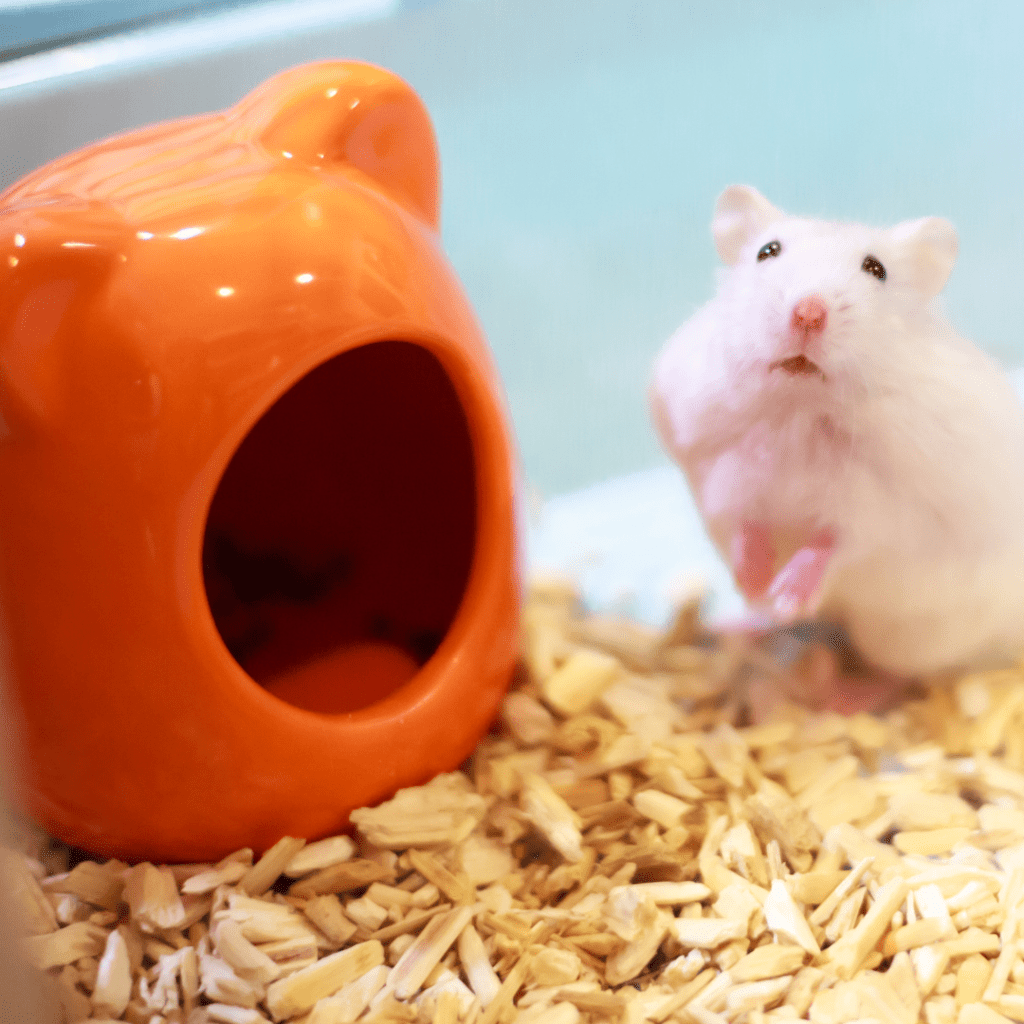
Bringing home a new hamster is an exciting experience, but ensuring their well-being and happiness requires careful consideration of their living environment and accessories. Start with a large enclosure (UK charities such as PDSA and Blue Cross recommend at least 100 x 50 cm of floor space; see how to set up a hamster cage), then add the essentials below.
- Hideouts and Shelter: Hamsters are naturally burrowing animals and need safe, cozy places to retreat to. Provide at least two hides, such as enclosed houses, tunnels, and coconut huts.
- Bedding Material: Choose soft, absorbent bedding such as paper or aspen, at least 20 cm deep in part of the enclosure so your hamster can burrow. Avoid cedar or pine shavings, which can irritate your hamster’s respiratory system, and fluffy cotton-style nesting material.
- Exercise Wheel: A solid-surface wheel big enough for your hamster to run with a straight back: at least 28 cm (11 in) for Syrians and 20–25 cm (8–10 in) for dwarf hamsters. More in choosing the best exercise wheel.
- Chew Toys: Hamsters have continuously growing teeth that require regular chewing. Offer chew toys made from safe, untreated wood, apple sticks and hay.
- Food and Water: A heavy ceramic bowl that won’t tip over, and fresh water every day in a bottle, a small bowl, or both. See what hamsters should eat.
- Sand Bath and Toilet Corner: Hamsters usually pick one corner as a toilet and love rolling in sand to clean their coat. A dish of plain, dust-free sand works for both. Avoid chinchilla dust, which is too fine.
- Tunnels and Digging Boxes: Tunnels and boxes filled with different substrates encourage natural exploring and burrowing.
- Foraging Toys: Puzzle feeders and scatter feeding let your hamster search for food, just as it would in the wild. Try these food puzzle ideas.
- Low Climbing Structures: Hamsters enjoy some variety in height but are poor climbers. Keep ladders and platforms low (under about 20 cm) and securely fixed.
Providing your new hamster with the right accessories is crucial for their physical health, mental stimulation, and overall well-being. Focus on the essentials first (space, deep bedding, hides, a correctly sized wheel, food and water), then add enrichment over time. Once everything is set up, see how to tame your hamster step by step.



Leave a comment