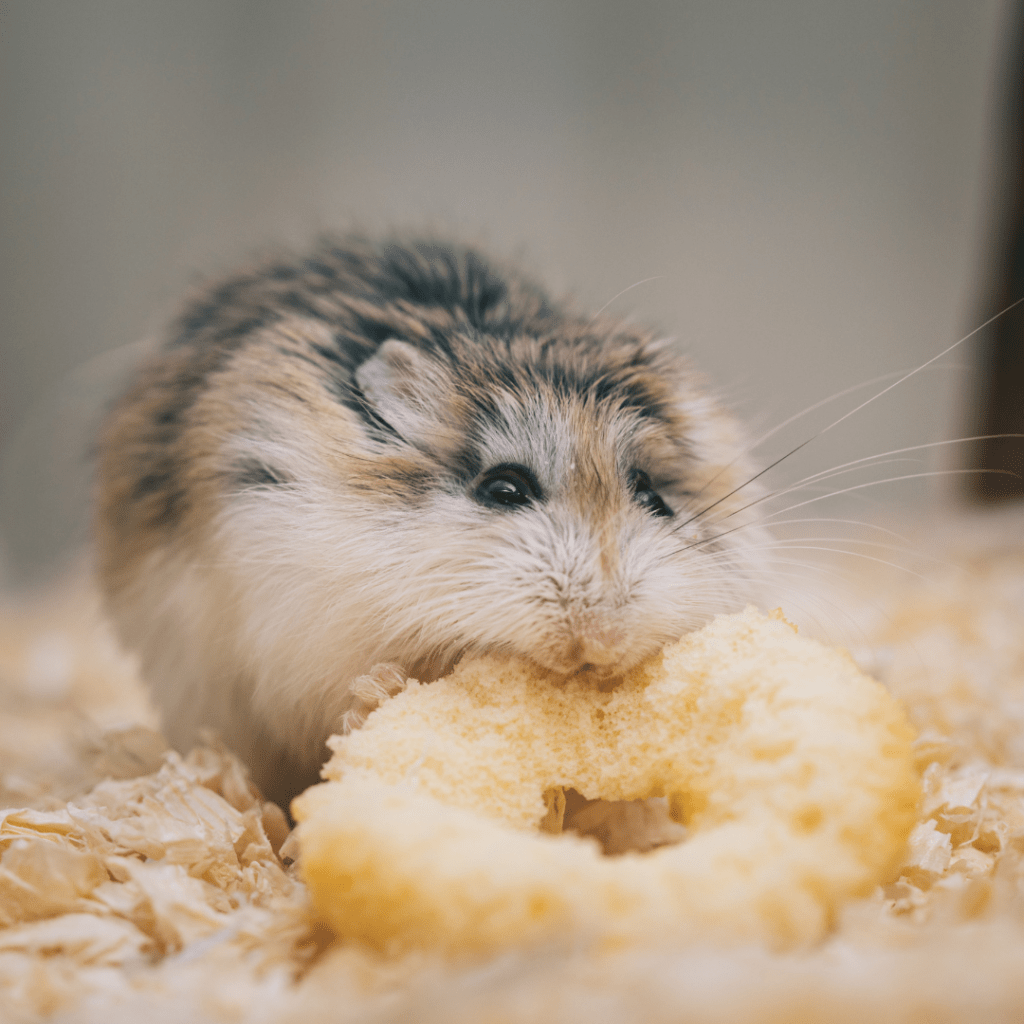
Hamsters are delightful little creatures with unique dietary needs. Providing them with a well-balanced and varied diet is essential for their health, longevity, and happiness. In this guide, we’ll look at what hamsters should eat, how to balance their diet, and how to introduce new foods safely.
- Understanding a Hamster’s Dietary Needs: Hamsters are omnivores, meaning they eat a combination of plant-based and animal-based foods in the wild. Their diet should include a variety of food groups to meet their nutritional needs.
- A Good Hamster Mix or Pellets: The base of the diet. Look for a high-quality food made for hamsters, free from artificial colours and added sugar. Scatter some of it around the enclosure so your hamster can forage.
- Fresh Vegetables and a Little Fruit: Offer small amounts of safe vegetables such as carrot, broccoli, cucumber and leafy greens. Fruit is sugary, so keep it to a tiny piece occasionally. Introduce new foods gradually and remove uneaten fresh food the next day. See also safe plants and herbs for hamsters.
- Protein Sources: Hamsters need protein for muscle development and energy. Offer small amounts of plain cooked chicken, boiled egg, mealworms or plain tofu a few times a week. Avoid fatty or processed meats.
- Whole Grains and Seeds: Small amounts of oats, barley or plain cooked brown rice, plus the occasional sunflower or pumpkin seed. Seeds are fatty, so offer them sparingly.
- Hay and Grasses: Fresh hay supports dental health and digestion and doubles as nesting and foraging material. Make sure it is free from pesticides.
- Treats and Snacks: Choose healthy treats such as dried vegetables or seed sticks without added sugar, and limit them to a few times a week. Avoid yoghurt drops and sugary or high-fat treats.
- Fresh Water: Provide clean, fresh water every day in a sipper bottle, a small heavy bowl, or both.

- Monitoring and Adjusting: Pay attention to your hamster’s eating habits, weight and overall health. If you notice changes, speak to a vet. Adjust their diet based on age, activity level and health.
- Introducing New Foods: Offer a tiny amount of the new food alongside the usual diet, then gradually increase it if your hamster tolerates it well.
A varied diet of a good hamster mix, fresh vegetables, a little protein, hay and fresh water keeps your hamster healthy and happy. Introduce new foods gradually, keep treats small, and watch for any changes. For more ways to make mealtimes fun, try these food puzzles for hamsters, and if something seems wrong, check common hamster health problems.



Leave a comment